Showing posts with label hair transplant doctor in Delhi. Show all posts

Wednesday, 1 September 2021

In a Hair Graft, does the hair from the donor area grow back?


Everyone is clear that the key to a hair graft is that the hair transplanted to the recipient area, after a while, grows back and never falls out again. It is this that makes FUE Hair Transplant in Delhi the only truly definitive solution against baldness. But is it just as clear what happens to the donor area? Is this area, where the follicles genetically immune to alopecia are extracted, is left without hair after the intervention? It is a common doubt and concern in many patients, so we are going to dedicate this post to trying to solve it.

First of all: how is the hair graft process?

Hair microsurgery consists of selecting the most suitable follicular units, extracting them with precision from the donor area of ​​the patient, preserving them and reimplanting them follicle by follicle in the recipient area, respecting the angle and natural depth of the hair. The procedure is minimally invasive, so recovery is quick and does not leave scars. Thus, a natural and permanent result is obtained that does not damage the scalp, explains the hair transplant surgeon in Delhi.

During the first weeks after the Hair Transplant in Delhi, the postoperative recovery phase occurs, which usually includes redness, swelling, itching and crusting. After this period, the grafts have already taken root and healed, and it only remains to wait for the hair to grow back progressively over the following months. Although the new hair can be seen almost completely from the third or fourth month, usually it is not until the year when the definitive results are obtained. A relatively long process, but definitely worth it, says the hair transplant doctor in Delhi.

What is the donor area for a hair graft? Where do you get my hair from?

The one known as the donor zone covers the entire occipital and temporal area of ​​the scalp. That is, the entire region located between the crown and the nape, as well as the sides of the head between the ears and the temples. The follicles in this entire area are immune to the negative effects of dihydrotestosterone (DHT), the main hormone responsible for androgenic alopecia. Therefore, even if they are transplanted to another part of the scalp, they will still not be affected by the fall, explains the hair transplant doctor in Delhi.

The key question: does donor hair grow back in a hair graft?

The quick (and reassuring) answer is yes. Hair grafting is not about changing the area of ​​baldness. But how is it possible for hair to grow back in the donor area if the follicles have been removed? The explanation lies in the fact that the same follicular unit can contain between 1 and 4 hairs (2.2 on average). Therefore, what is done is not to extract all the follicles present in the donor area, but to select the most suitable (those that contain the most hairs), taking care at the same time not to remove all of them from the same point, but distributed throughout the area, explains the hair transplant surgeon in Delhi.

In this way, enough hair is obtained to repopulate the recipient area without leaving the donor area deserted. The follicles that remain in the donor area (which are shaved to perform the intervention) grow back naturally and, in doing so, more than cover what has been extracted. All this is of vital importance, since it is the follicular density of the donor area that defines the suitability of a patient to undergo a graft, in addition to marking the limit of follicles that can be transplanted without affecting the appearance of said region, says the hair transplant doctor in Delhi.

Evolution of the donor area of ​​a hair graft: 2 weeks after the intervention

Having clarified that the hair does grow back in the donor area after the hair graft, we are going to see in a little more detail how the process evolves. 

2 days later

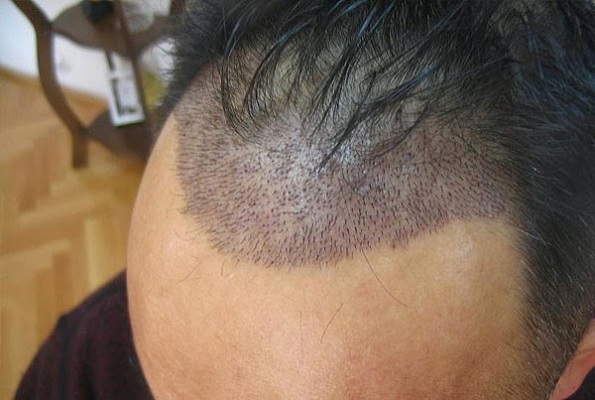
As a result of the anaesthesia and the punctures, the area of ​​the neck is left with a sensation like “corking” after the intervention. After two days, sensitivity returns. As a negative counterpoint, a certain itch may also appear with it. It is very important not to scratch to relieve the itch, but to apply saline or a mild topical pain reliever.

4 or 5 days later

Small scabs or skin scales begin to appear, as a result of the healing of the incisions made. They should be allowed to fall naturally, without scratching or tearing, to avoid visible scars. It is advisable to thoroughly wash the area with warm water and neutral shampoo. During this phase it is still normal to feel certain discomforts, such as itching or a feeling of tightness, which can usually be tolerated without the need to resort to painkillers.

1 week later

The swelling and scabs will become increasingly unnoticeable. Little by little the area will be fully recovered, allowing the hair to grow back.

2 weeks later

After two weeks, all the discomfort will have disappeared, and it only remains to wait for the hair to grow naturally, thus hiding any trace of the intervention.

Fear not, the hair graft technique has evolved a lot and gives very good results. If you still have doubts, contact the best hair transplant doctor in Delhi for more info.

Thursday, 1 July 2021

Types of Recession in The Hair

The recesses are usually the first symptom that the hair is falling out. At first, they will be priceless, but over time they can become pronounced. In the beginning they can be even attractive if you maintain a good density of hair on the rest of the head. You can also hide them in this case. Best hair transplant surgeon in Delhi explains how you have to monitor them so that they do not turn into generalized alopecia.

Am I going bald?

The first person who can notice that something is happening with your hair is you. How? Because when you get up you see that a lot of hair remains on the pillow, because when you comb your hair, it is more protagonist in the comb, because you are left with a lot of hair in your hand... These are just a few examples of the first signs that indicate that something it does not go well with your hair. You do not notice entrances or crown, but you do see that, as you continue like this, over time you will begin to see them.

It may be happening that it is a temporary drop caused by a certain factor, and even seasonal. Hair loss is much more common in autumn than in summer. That is why it is best that you go to the hair transplant doctor in Delhi to tell him your concerns and he will be the one who makes the best diagnosis.

At what age can the tickets appear? 

Tickets can appear from the age of 20. It can be the first symptom of what you call premature baldness or androgenetic alopecia, also known as common baldness. The medical explanation has to do with hormones. Specifically in the hair follicle there is an enzyme (alpha-5 reductase) that transforms testosterone into dihydrotestosterone. This process is what causes hair loss. It has been shown that in people with so-called premature baldness the amount of this enzyme is higher and its activity also.

After the appearance of the recession, the key is to see how quickly these recessions are gaining space on your scalp. This process may be slow or very slow. 

From the recession we go to total baldness...

We just said it: The hairline can be the first sign of the way to total baldness. There is a scale, the so-called Hamilton-Norwood, which classifies alopecia at different levels so that specialists can apply one treatment or another. There are up to seven degrees depending on the baldness, which determine how advanced the alopecia is.

In grade II is when the recession begins to appear. In general, this stage can last until past 40 years and there is still no talk of alopecia as such. That is why before we also said that you have to see how quickly they progress.

The problem is when the crown begins to lighten, then the entire upper part of the head... Until you reach the last degree, VII, which is when generalized alopecia is already considered. At this level only a very narrow section of hair remains at the back of the head. It is the most chronic degree of common alopecia.

Is there a solution to avoid receding hair? 

The first thing that exists is the solution to hide them. If you have recesses but you have a lot of hair on the rest of your head, you can choose several types of haircuts to hide them:

  • With gradients. As your hair has different levels and textures, the entrances fit perfectly and blend into the hairstyle. The most typical is the one done by leaving the neck area and the sides shorter. 
  • With very short hair. It does not get shaved but we do it with a machine cut with the cut level at 1, 2 or 3. 
  • Shaved hair. If you already want to cut your losses, this is the option that many choose. Of course, you have to have a nice head shape so that it suits you much more. 

If you are not convinced by these types of solutions to hide them, and what you want is to have hair again in the area of ​​the entrances, go for best hair transplant in Delhi.


The latest technology at the service of your hair with the FUE Hair Transplant

The only solution to regain hair at the entrances is through a hair graft. In this sense, the FUE hair transplant in Delhi is the most advanced. It is so called because it refers to Follicular Unit Extraction. This means that the follicles are carefully extracted from the donor area one by one thanks to the highest quality instruments. By doing this extraction so precisely, not only the largest number of follicular units are preserved, but also the highest quality ones. Subsequently, these follicles are implanted in the recipient area, considering both the angle and the depth of insertion. You go back to having your own hair in an area where you no longer thought it was possible.

It may be that for the area of ​​the entrances it is worth you with around 1,800 follicles to cover them, a cheaper option than that of unlimited follicles. The hair transplant surgeon in Delhi will be the one who best indicates what is best for you.

How is this procedure at Dr Dutt Hair Transplant Clinic in Delhi

The procedure is patient-centered from the first visit until after the intervention. We explain it to you below:

On the first visit, our team of specialists will carry out a complete study of your case. In this way, we will analyze your needs and we can guarantee total security and optimal results. 

Already in the intervention, a first part of the review and design of the receiving area is carried out. Anesthesia is applied and the entire process of removal and conservation of follicles and their subsequent implantation is carried out. The intervention time will depend on the number of follicles to be implanted.

After the procedure, the specialists will tell you everything you have to do.


Saturday, 7 September 2019

Post-Surgical Hair Graft Care

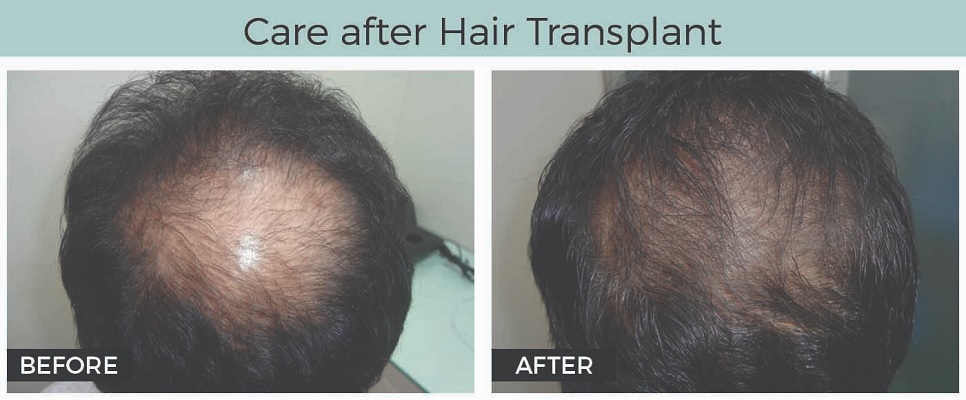
Before and After

One of the doubts that many of our patients have before having a hair transplant in Delhi is that they want to know what care they need after the surgery.

From Man we want to help you solve doubts and guide you on what you should do to recover, as well as the actions you should not perform, since this could have negative consequences in the intervened area.

During the first 24 hours:

Bandage: After the operation, a tight bandage will be placed to avoid the formation of edema as much as possible. If the bandage moves, it is important not to try to reposition it, so as not to harm the grafts.

Medication: There is a type of surgical medication that is usually usual for these cases, which are prescribed by the hair transplant doctor in Delhi and can be: ciprofloxacin antibiotic (1 every 12 hours until the box is finished in 5 days, this depends on what the doctor recommends ) Enantyum or paracetamol analgesic, (1 every 6 hours or 8 hours for 4 days) remember to always under medical supervision.

As a result of anesthesia, it will be difficult for you to measure distances, so be careful not to hit your head. Another important fact is that, during the first 24 hours you should not drive.

To minimize as far as possible edema takes into account the following:
  • Apply ice on the forehead for 10 minutes the first 4 days always being careful not to touch or affect the newly transplanted follicles, if necessary ask for help so you can do it.
  • Keep your head straight, as if you were a Buckingham Palace guard straight and upright with your head slightly tilted up the first 4 days. Hey ... remember that you will look amazing with your new look get used to proudly show it to the world.
During this first phase after the hair transplant in South Delhi it is important that you know the correct way in which you will sleep so as not to affect the intervened area always on your back resting on the scar and semi-sitting.

Avoid sleeping on your side for care of the donor area. Sleep on your stomach as this could damage the implant performed.

It is important that you know that during the medication you should take care of your diet, in addition to the posture when sleeping, while you are in this phase no alcohol, yes, we know it ... It is hard but calm because it will be worth it when you look a very cool mane!

Avoid bending over, taking weight and sudden efforts. If you want to take something from the ground you must have your head straight and bend your knees.

To walk, watch TV, use your mobile phone, computer, always keep your head straight, no matter how insistent your colleagues are on the WhatsApp, take the mobile slowly and do not use it by viewing the screen at an inclined angle, remember straight head.

Once you have passed this first phase, you will enter the next one that is starting 24 hours after the intervention.

In this period the washing will be done once a day, every day with neutral shampoo. The water temperature must be tempered and at low pressure.

During the first 5 days, the transplanted area will be washed with the fingertips in very smooth circular movements. This is the time it takes for grafts to be fixed to the scalp and in this period the sleeping posture should continue as you have done since the first 24 hours, from the fifth day you can sleep as you prefer.

Between day seven and day twelve the scabs will fall next to the hair sheath.
Between these days you can start combing your hair carefully, thermal water will be given two or three times a day in the transplanted area and in the area of ​​the scar you will have to clean it with gauze impregnated in that water. You can apply rosehip water once a day on the scar, preferably at night.

When 15 days have elapsed after the fue hair transplant in Delhi, the washing will be normal with water pressure and temperature at ease, but the shampoo with which you will wash will be neutral for at least approximately 3 months. As mandatory indication; avoid the sun in the area with grafting, the sauna, contact sports, at least for a month and a half. A month you can cut your hair, dye, use fixative and dryer with hot air if you wish.

In case you had some itching, redness or less sensitivity, do not worry this is normal. But if you want to be more sure about it, you can check with the hair transplant surgeon in Delhi who has taken your treatment.

We hope we have helped you and that it serves as a reference on the care that a patient with a hair graft should receive once the transplant has been done. If you have any further questions, do not hesitate to contact our specialized hair transplant center in Delhi and they will gladly assist you.

Wednesday, 21 August 2019

CARE AFTER HAIR GRAFTING

Before and After

More and more men and women are opting for a hair graft to recover lost hair for various reasons such as age, hormonal factors, stress or genetic causes. At this time, the innovative FUE hair transplant in Delhi for micro grafting of the hair follicle has become one of the most demanded for its effectiveness and its simple and rapid postoperative process after hair grafting.

In this post hair transplant doctor in Delhi explain the precautions that must be taken into account after the process of the FUE (Follicular Unit Extraction) method . This technique, which has already become popular all over the world, is based on the transplantation of follicular units from the donor area (the most populated) to the recipient area, which suffers from alopecia and which wants to be covered with new hair. In a single session up to 5,000 follicular units are transferred (each follicular unit can contain 1 to 4 hairs).

What precautions to take after a FUE implant?

After performing hair transplant in Delhi it is not necessary to remain hospitalized. While it is true that there is the option of resting a few hours in the hair transplant center in Delhi under observation for greater patient tranquility, the postoperative period of this hair graft consists rather of a series of recommendations that the patient should follow in the tranquility of his home so that your process evolves in the usual way. These are some of the care after hair transplant in South Delhi to consider:
  • Work . Normally, the patient can join the next day. Although everything will depend on your job, since in which it is necessary to make physical effort or wear a helmet, such as construction, you must wait up to two weeks to join or even a month, depending on the case.
  • Sport . You cannot play sports during the first month. In the case of contact sports, such as martial arts, the rest period lasts up to 90 days.
  • Anti - inflammatories . During the first week, it is usual to take anti-inflammatories since it is very normal to have a somewhat inflamed head in the postoperative period of the FUE technique, product of the serum and anesthesia.
  • Activities that involve sweating . Activities that involve sweating during the first week should be avoided as much as possible.
  • Cap and hats . During the first three days the head must remain uncovered, it is only allowed to wear a cap that exerts little pressure during the first week and tight helmet from the month.
  • Haircut . It is possible to cut the hair with scissors after three months of the intervention and to pass the razor you have to wait six months.
  • Sleep . The first week it is advisable to sleep with an inflatable collar to keep the posture face up.

How to wash the hair after a graft?

After a hair graft it is recommended by hair transplant surgeon in Delhi to wash the head with warm water from the fourth day. The best way to do it is with subtle touches, without scratching and drying it gently with paper. Only from the first month it is advisable to dry with a towel. It is also from day 30 and not before when the patient can bathe or submerge in the sea or the pool.

In the donor area it is possible to notice itching and irritation during the first days so that physiological serum can be applied to relieve them. In addition, in the donor area you can apply some ointment or aloe vera gel that is as pure as possible.

Postoperative capillary graft

The postoperative period of the capillary graft implies a really short recovery period since the FUE hair transplant in Delhi almost does not create scars, only micro wounds that do not require sutures as in other procedures such as the FUSS, which leaves a large scar.
  1. 15 days . The most intense postoperative period in the FUE technique is the first fifteen days, when the area is more flushed and itching and swelling may be noticed. Small scabs appear that begin to fall from the week naturally.
  2. Between the third week and 2 months . It is the phase in which the follicles detach from the transplanted hair. Do not be alarmed because this hair will grow again without fall.
  3. From 3 months . The new hairs start to grow.
  4. From 6 months . A new regrowth with stronger and longer hair is produced.
  5. One year later . The result is visible in most cases with a completely natural finish, in which it does not distinguish hair from an implanted follicle from that which has not been.

Thursday, 25 July 2019

Treatments for after a hair transplant

Hair grafts are delicate surgeries. That's why our patients leave out hair transplant center in Delhi with a series of tips they must adhere to. And in addition, it is very possible that they are recommended by hair transplant surgeon in Delhi to follow treatments after a hair transplant.

Depending on the particular case of each patient, we can opt for two types of surgery, with the FUSS or FUE techniques. And the treatments for after hair transplant in Delhi will also be assessed according to each case.

Recall that FUE stands for Follicular Extraction Unit. FUE hair transplant in Delhi technique that redistributes the hair follicles. For this, scalp micrografts are obtained from another area of ​​the patient (usually in the posterior or lateral area). The hair follicles that contain that extracted tissue are analyzed and prepared. Then they are implanted by means of microincisions in areas with less capillary density or with alopecia.

For its part, FUSS stands for Follicular Unit Strip Surgery. It is a hair transplant technique with capillary graft. You will also hear about her as a "strip" technique. In this case, a thin strip of skin between 15 and 20 cm long and approximately 1 cm wide is extracted. Normally the strip is obtained from the posterior or lateral area of ​​the head. A stitch is made with stitches and there is a scar that aesthetically is almost invisible when it is concealed by the surrounding hair. That band of hair is grafted in the depopulated area and where the hair grows back.

With both techniques you can recover hair in the entrances, in the frontal line, in the crown ... The results are spectacular.

However, it is usual to recommend treatments after a hair transplant in South Delhi. The goal is to achieve even better hair quality. And therefore, a global improvement of the image. In any case, the patient must also follow certain indications of care to keep the hair grafted.

Treatments for after a hair transplant: which
  • Minoxidil
It is a medicine that is used to stimulate hair growth and slow down hair loss. It can be used in cases of alopecia and hair loss in men and women. As a general guideline, it is usually recommended to 5% for men and 3 or 4% in women to avoid the appearance of facial hair (hirsutism) that is described in 5-10% of cases. 

When its use comes, our hair transplant doctor in Delhi indicates the beginning of the Minoxidil lotion between 15-30 days post-surgery.

It is a lotion that is applied topically, with sprays and a gentle massage on the scalp. Most patients prefer to use it at night, because it is left to act during the night and, when they wake up, they can wash their heads.

Minoxidil has a vasodilatory effect. It stimulates capillary microcirculation with the consequent increase in blood supply.

Its action, like the Finasteride, which we will talk about later, is greater at the level of the upper area of ​​the head and crown and less effective in the front-line area and inlets.
  • Finasteride
Another of the post-transplant treatments that can be indicated is Finasteride. This drug acts as an inhibitor of an enzyme (5-alpha-reductase type II), which is responsible for transforming testosterone into dihydrotestosterone (DHT). And this DHT is the enzyme responsible for the terminal hair, as well as acne or the growth of the prostate. In individuals with androgenetic alopecia, DHT acts at the level of the hair follicle accelerating its growth phase. The hair is refined by a miniaturization process, until its life cycle is exhausted prematurely.

Finasteride is usually indicated for men with androgenetic alopecia (combination of hormonal factors and genetic predisposition) between 18 and 40 years of age. Like Minoxidil, it is usually more effective at the upper and crown area than in the front and front lines. It is administered orally.

Other treatments
  • Vitamins
Beyond drugs such as Finasteride or Minoxidil, oral or infiltrated vitamins can be another treatment after a transplant indicated in some cases.
  • PRP
This is how the Platelet Rich Plasma treatment is known In this case, blood is drawn from the patient himself. In the laboratory, the plasma fractions are separated by controlled centrifugation for 9 minutes. That plasma rich in growth factors is administered with microinjections in the patient's scalp. 

The PRP is able to stimulate the formation of collagen, elastin and hyaluronic acid. It also increases vascularization at the level of the hair follicle. With all this is indicated as a method of brake fall and also to promote regeneration in patients with moderate hair loss.

These post-transplant treatments can be indicated in combination. It is usual, for example, for the FUE technique to be supplemented with 3 months of oral vitamins and 3 sessions of PRP (Platelet Rich Plasma). Or that a patient of the FUSS technique is instructed to take vitamins orally and, as a long-term maintenance treatment, 5% Minoxidil and Finasteride 1 mg orally.

Our specialists will tell you what treatments after the best hair transplant in Delhi are the most suitable for your case. Request an appointment without commitment.

Monday, 20 May 2019

CAPILLARY MICROGRAFTING BY FUE TECHNIQUE

capillary_micrografting

More and more people are relying on capillary micrografting techniques to eliminate the problems of baldness and alopecia. At Dr Dutt Hair Transplant Clinic in Delhi , we use the FUE technique, from the Follicular Unit Extraction, one of the most innovative and important procedures for hair transplant in Delhi.

In this blog, we explain some of the most important data about hair micrografting using the well-known and so beneficial FUE Hair Transplant in Delhi: what it consists of, how is the procedure and its incredible advantages.

WHAT DOES IT CONSIST OF?

The structure of the scalp is divided into two fundamental areas: the donor area, which is on the back (occipital) and lateral of the head; and the receiving area, which is located in the upper part, in the crown, and in the upper part of the forehead.

This technique involves the individual extraction of follicular units from the donor area in order to repopulate the receptor areas where baldness has occurred.

It is recommended to apply the FUE micrograft in people who do not want to undergo a more aggressive intervention to recover their capillary density and who also want to avoid scars. This technique is very beneficial in those men who want to fight the incipient entrances with a painless method and with very natural results that are hardly appreciated and is recommended in people who want to wear short hair.

Although it is a long and laborious intervention, as the follicles are transplanted one by one to repopulate areas with a lower capillary density, the results are so positive that more and more patients are interested in this best hair transplant in Delhi.

HOW IS IT THE PROCEDURE?

The following movements are followed:
  1. Shaving of the donor area. The hair is shaved leaving a length of approximately 1 or 2 mm.
  2. Local anaesthesia. Local anaesthesia is administered in the donor area. The patient will remain awake and aware throughout the process.
  3. Follicular units extraction. The process begins with the extraction of follicular units that we will use for repopulation. We introduce a punch of 0.8 to 0.9 mm in diameter in the skin, we thread the salient hair and cut the length of the unit, extracting it delicately with tweezers.
After extraction, hair transplant surgeon in Delhi reviews the grafts and order them by number of follicles that make up each follicular unit. We leave them at rest with a solution with physiological serum, and we prepare them to re-implant.
  1. Grafting of the units. Hair transplant doctor in Delhi makes the holes following a line of action that will depend on the density of the implants and the direction of the implantation, all so that the result is as natural as possible. We use, when indicated, the technique using implanters.
ADVANTAGES OF THE FUE TECHNIQUE

There are many benefits that our patients receive when undergoing this procedure, the main one being the extraction of the follicular units and the verifiable fact that there will never be a problem of immunological rejection to be hair of the same patient.
  • Minimally invasive Micro-scallops with a hollow cylindrical tip with a fine diameter between 0.7 to 0.9 mm are used. No type of large cut is made.
  • It does not leave a scar. This device leaves tiny holes that are healed within a week. It will not leave a visible scar, so it will not be noticed that there has been a surgical process.
  • Quick recovery. The technique is much shorter and the process is completely painless, being able to make a normal life immediately.
  • Natural result There is no trace of procedure, therefore a result is totally imperceptible to the naked eye.
If you want to know more about the FUE Technique, at the hair transplant center in Delhi we are specialists in capillary micrografting in Delhi, ​​so we will guide you through the process so that you do not have any doubt if you finally decide. Our priority is that you are totally sure of the step that you are going to take and that you are satisfied with the results that end.

Friday, 1 February 2019

Pros and Cons of the Hair Transplant

The first thing to consider is that not all people are able to undergo a hair transplant in Delhi. The first condition is that the hair loss has ceased, which is why in the case of men, age is also a determining factor and should not be performed in young people, but rather it should be expected that alopecia has reached its maximum expression.

Sex is another factor that affects the success of this procedure, since alopecia manifests itself differently in men and women: while in them, hair loss is concentrated in specific areas, in them it is distributed throughout the scalp lightening in all its extension.

In addition, in women not all areas of their hair respond equally when it comes to increasing hair density through a hair transplant in South Delhi, as well as the fact that there is less availability of hair follicles to implant. It is for all that while most men are good candidates, the same is not true for women, unless alopecia affects small and very limited areas, as is the case of a scar.

Finally, it is worth mentioning the fact that the results are much more visible in patients with dark and coarse or curly hair, since it offers an appearance of greater capillary density.

Experienced surgeons for hair implant
The hair transplant in Noida must be done by a hair transplant surgeon in Delhi and a very experienced and highly skilled team, since otherwise there are many factors that can affect the success of the intervention. Both the technique of extracting the follicular units and the treatment of them before being reimplanted are fundamental to achieve the survival of the greatest possible number of them both before and after the implantation. In addition, the results can also be unsightly if the transplanted follicles are not placed in the right number, in the right place and with a distribution that follows specific aesthetic criteria that allows to give the new hair a completely natural appearance.

pros and cons of the hair implant

Realistic goals regarding the hair implant
A good hair transplant doctor in Delhi should inform the patient about the results that can be obtained depending on their characteristics, so that the patient does not have an expectation far from reality. And this is especially important in the case of women. In men it will depend on the extension that should be repopulated and the sufficient availability of donor follicular units.

In each session, depending on the technique used, between 1,000 and 5,000 units may be required and the ideal hair density for good results should be 30 to 90 follicular units per cm2. In men with a very extensive alopecia you can use the strip extraction technique (FUT or FUSS) and even combine it with the FUE hair transplant in Delhi to obtain follicles from the sides, but you cannot expect to cover the entire alopecia surface equally. 

The good thing is that the hair that comes out of the follicular units transplanted will not fall, even though it is probable that not all of them will progress.

The hair implant is a surgery
The best hair transplant in Delhi is a surgical procedure that is performed under local anesthesia, so it is not painful. However, as such, it can have its complications in the postoperative period, such as an infection, an inflammation that can occur even with pain, or small scars remaining in the area where the implant was performed. However, it is not often that this happens. In the case that the FUT technique is used, the postoperative period will be longer and more annoying.
It should also be noted that in most cases, the hair of the follicular units transplanted falls after two or three weeks of the intervention. But in no case should be a signal of alarm and suppose a shock for the patient, since they will leave new hair from the three months and the roots will have been strengthened.

Tuesday, 29 January 2019

Frequently Asked Questions About the Hair Implant


What factors determine whether a person can or cannot undergo an FUE hair transplant in Delhi?
There are several. First of all, that the hair loss has stabilized, taking into account the pattern of a possible future hair loss. It is important to know the cause of alopecia and, where appropriate, treat it appropriately, to cut hair loss before proceeding to the implant. Then the density and number of follicular units available in the donor area (back and side of the head) must be determined, in order to have enough to cover the depopulated area. The characteristics of the scalp and hair can also condition the final result.

How long is a hair transplant session and how many are needed?
Each session of hair transplant in Delhi can last between 4 and 5 hours. As for the number of sessions, it will depend on the extension of the area that you wish to repopulate and the density that you want to obtain.

Is it necessary to be accompanied to a hair transplant session?
It is convenient since local anesthesia is used to perform the implant.

How long can you see the results?
Keep in mind that in the vast majority of cases the transplanted hair will fall after a week and will not start again until after three months (some before and others later), growing one centimeter per month, that the final results will not be clearly visible until at least 9 months have elapsed.

Frequently asked questions about the hair transplant

Does fue hair transplant the best option available?
FUE hair transplant uses hair follicles plucked from you back side of the head, leaving no scar. And if consider the result, it is the best hair transplant in Delhi giving almost 100% success rate.

Can you lose the hair that has been transplanted?
No. The hair on the nape of the head and the sides of the head are genetically programmed to never fall and will maintain this characteristic regardless of the place of the head in which they have been grafted.

Do all the follicular units that are implanted survive?
If the hair transplant doctor in Delhi involved in the hair implant intervention has the necessary experience, almost all follicular units will survive.

Does the transplanted hair require special care?
No. It will be enough to carry out the usual care that is carried out with the rest of the hair, even when it comes to the use of cosmetic products.

Can hair implants be made in other areas of the body other than the head?
Of course. In fact, you can repopulate eyebrows, eyelashes, areas of the beard and other areas of the body in which they have lost their hair, for example, as a result of a scar.

Can there be complications in the hair implant intervention?
It is a minimally invasive surgery, so complications, not frequent, will always be mild: infections, inflammation, redness of the skin, etc.

Monday, 21 January 2019

Hair Transplant With FUE Technique


The FUE technique or extraction of follicular units that is used for the hair implant in the treatment of alopecia requires a great experience on the part of the hair transplant surgeon in Delhi, since it is a microsurgery procedure that requires a lot of skill and precision, given that in each session they are extracted, one by one, around the 4,000 follicular units that are less than a millimeter thick and that would be useless if damaged during the procedure.
It is very laborious, but it allows obtaining hair follicles from different areas (back and sides of the head) without affecting the general appearance of the hair, in terms of density.
To perform it requires a minimum sedation, has a low risk of complications and recovery is very quick and painless, so that the patient can resume their usual activity immediately which makes it one of the best hair transplant in Delhi.

FUE Technique

Extraction of follicular units: this is carried out by means of a tool called punch (punches) of a caliber that oscillates between 0.75 and 0.9 millimeters, with which the follicular unit is surrounded and a small cut is made in parallel to the hair shaft and a controlled depth. This done, the isolated follicle is extracted with very fine forceps and classified according to the number of hairs it contains (from one to four). While the extraction of follicular units lasts (up to 4,000 in each session), they are kept at a low temperature in a special solution that maintains their vitality. 
This procedure leaves small circular wounds that scarcely bleed, that heal quickly and then become completely imperceptible.
Hair Transplant in Delhi with the FUE technique
Implantation of extracted follicular units:  extracted follicles are implanted one by one in the area to be repopulated using an instrument called implanter, which is nothing more than a very fine needle that allows a microincision to be performed and leaving the follicular unit in the inside of the scalp and to the necessary depth. 
At this point comes into play the artistic criteria of the hair transplant doctor in Delhi who must distribute the different hair follicles taking into account the number of hairs that each of them contains, the capillary density that you want to obtain and the alignment necessary for the final appearance to result more natural as possible.
Indications of the FUE Hair Technique
The selection of the candidates for the realization of a hair transplant in South Delhi by the FUE technique is based fundamentally on a criterion of realistic expectations, which depends to a large extent on the extent of the area that must be repopulated, since it is necessary to take into account that the amount of follicular units that can be obtained from the donor areas (nape and sides of the head) should be enough to cover the surface of the scalp that does not have hair. Also, we must consider the possibility of future hair loss.
The important factors regarding the hair refer to its quality, texture and color, also taking into account the color of the skin.
The FUE hair transplant in Delhi offers excellent results when small areas are repopulated, such as those marked by a scar, eyebrows, or some area of the beard. When it comes to large surfaces, such as classic male baldness, you have to combine this technique with another of FUT, in which the follicular units are obtained by cutting a strip of scalp at the nape of the neck.

Friday, 11 January 2019

Advantages of FUE Hair Transplant


Hair transplant in Delhi is offered using the FUE (Follicular Unit Extraction) method used to densify the hair naturally and without scarring. A follicular unit (or graft) is composed of 1 to 3 hairs. The graft transplant is performed with micro punches of 0.6 to 0.8 mm in diameter: this is the MICRO FUE technique with which it is possible to perform "mega sessions" and transplant 4000 grafts (from 6000 to 10000 hairs) to obtain optimal density in a single session.

The aesthetic aspect of hair transplantation comes from the natural method of FUE transplantation, as well as the number of hair implants (a graft can contain between 1 and 3 hairs).
The absence of scars with the preservation of the capillary richness of the donor area is the advantage of the FUE hair transplant in Delhi, which during the hair transplant session has as a first step, to take grafts to restore them in the selected areas. With the FUE technique: the sample is taken from the donor, without leaving any scar or visible trace on the patient.
On the other hand, the technique FUT (Follicular Unit Transplant or in Spanish Follicular Unit Transplantation), consists of taking a band of scalp from the donor and then closing the wound. The grafts are cut on a table and re-implanted. This technique saves time but has two main disadvantages: it creates a scar on the scalp (visible with short hair). In addition, this technique called "strip" reduces capillary richness because it damages the scalp in the sampling area.  
Which technique suits me best?
The experience of professionals who perform hair transplants by FUE counts a lot on quality and speed of execution. The precision, the delicacy and the speed of execution are acquired with a lot of practice.
The microperforated FUE is also the most respectful technique for the best hair transplant in Delhi with the environment for the scalp because the thinness of the samples creates very little damage to the scalp in the donor area. The capillary wealth of the donor area is preserved without any change in it.
The inclination of the grafts will allow a new natural growth and an easy design.
The number of follicular units transplanted counts in the natural result of FUE. In humans, baldness can usually evolve up to 40 years and, in general, remains stable afterwards.
An informative meeting with hair transplant surgeon in Delhi, asks questions about the technique, the professional's experience and the conditions in which the FUE capillary transplant sessions are performed. Dr. Manas Dutt is a trained and experienced hair transplant doctor in Delhi to answer any questions you may have.

Saturday, 5 January 2019

All About FUE Hair Transplant


The technique of (hair transplant) Extraction by Follicular Unit (FUE) consists of the repositioning of hair. It is extracted from the donor area (occipital or posterior area of the skull) hair by hair from its root, to be then grafted into the recipient area, maintaining the integrity of the follicular units and imitating to the maximum the direction of their natural growth.

The hair is extracted with a punch that makes small holes of 0.8 to 1 mm in diameter, which heal without scarring a few days after the hair transplant in Delhi. The relocated hair will remain permanently, due to the genetic information they contain. There is no chance of rejection since it contains the same genetic information, which is why even if the area follicle is changed (from the donor to the recipient) our body accepts it without complications.
The procedure of hair transplant in South Delhi lasts from 4 to 8 hours depending on the number of follicular units to be transplanted, so that they have an idea, up to a thousand could be 5-6 hours and would increase the proportional time up to 8 hours with 2000. Hair transplantation is done with the application of local anesthesia so there will be no pain during the hair transplant.
The care that the patient has to have after the FUE hair transplant in Delhi is very simple, but at the same time very important to obtain the best results and get all the follicles to finish fixing well. These indications, our staff, will be explained in detail after the procedure, as well as printed so that they do not have any doubt about it.
The best hair transplant in Delhi begins to take effect from the third or fourth month, growing 1 centimeter per month, progressively improving until 12 months, which is when the final result is already appreciated.
It should be noted that hair loss is closely related to the hereditary character we have received in addition to multiple factors, but this being the most common in men, we can not ignore the prescription of appropriate products that our hair transplant doctor in Delhi recommends for delay the fall of hair that genetics is predisposed to fall, as well as to strengthen and have a healthier hair depending on the characteristics of each person.

Wednesday, 1 August 2018

FUE Hair Transplant Technique & Procedure


The FUE technique of follicular unit extraction is the least invasive techniques of best hair transplant in Delhi. This procedure leaves no linear scar in the donor area because it does not use scalpel or sutures. FUE consists in collecting the follicular units one by one in the donor zone using circular micro-punch of the diameter corresponding to the follicular units of the patient.

FUE - Follicular Unit Extraction procedure - the craze triggered by a transplant Scarring-free hair is very important because many men treated for male hair loss do not wish any traces of a hair transplant in Noida.
Why the FUE?
Today, the main benefit that patients see in FUE is the absence of a linear scar due to FUT in the donor area. But when the FUE hair transplant in Delhi was developed, the first motivation of the hair transplant surgeon in Delhi was not the absence of scar but beautiful and well enlargement of the sampling area.
The benefits of FUE: limiting the donor area and new sampling areas
Previously at the arrival of the FUE, the hair transplant doctor in Delhi faced the problem of patients who had already undergone one or more interventions and whose donor area by FUT had been exhausted. These patients no longer had a sufficient donor area to cover the needs of the receiving area. FUE widens the donor area by 30% and 50% compared to the FUT. By allowing the exploitation of the temporal zones and the high and low zones of the occipital region, the donor zone is found enlarged and thus increases the number of possible hair transplant in Moradabad.
The benefits of FUE hair transplant in Delhi: short cut and no linear scar
The scar of the strip test:  Some patients do not want any traces of the procedure and in particular the scar after taking the strip. FUE leaves almost no trace visible to the naked eye. Patients can find their hair and the freedom to wear their hair as they wish.
The so-called FUE graft procedure meets these criteria: the absence of a recognizable linear scar, and the widening of the sampling area.
Today there are two distinct types of direct extractions, FUE and FIT (Follicular Isolation Transplantation), which are differentiated by the number of gestures in the follicle isolation stage but both are linear scar-free procedures. and allowing a large number of grafts.
The steps of the FUE procedure
5 operative steps punctuate the FUE graft procedure. Each step is equally important to each other and influences the outcome of the transplant.
Step 1: Mowing and preparation for the procedure
For FUE hair from the donor area is usually shorn. It is impossible to remove a follicle if the hair is more than 1mm.
However, a mowing "total" can sometimes be avoided depending on the case. This is called FUE "Patchy" or "Unshaven". Normal FUE requires total mowing. Mowing is done without a hoof. The ultra-short cut is still quickly forgotten because 15 days after the operation, the hair has already pushed back 0.5 cm

Step 2: isolate the hair follicles
The follicles are then selected directly on the scalp of the patient, the hair is isolated with a titanium punch with a diameter ranging from 0.7 to 1.0 mm. This step is one of the advantages of the FUE, we can then select each graft and therefore favour grafts of 1, 2, 3 hairs according to the needs of the recipient area. This is the so-called " Cherry Picking " stage - we select the best transplants!
To isolate the grafts, the punch drops 3 to 4 mm into the skin along the hair and follicle. This is the only step that requires the FUE punch. The grafts then isolated and dissociated from the epidermis and the dermis. But this one remains in the skin for the moment. They are not yet extracted.
The punch isolates the follicles on the scalp
Step 3: Extract the hair follicles "Cherry Picking"
Using micro-forceps, either a micro-forcep or a "mosquito" forceps, the selected follicles are extracted one by one. Each graft is then deposited in physiological saline and / or in a mixture of PRP and physiological saline. The grafts are then sorted and checked and prepared for implantation. The extraction procedure is then complete. One can begin the procedure of incisions and implantation which is the same in FUE or FUT.

Step 4: incisions in the recipient area
Using blades cut to the size of the follicular units, the practitioner draws the new hair using micro-incisions in the area to be grafted. The slides are cut and prepared for each patient. They are for single use.
It is at this stage that factors deciding the outcome of the hair transplant in South Delhi. These factors are:
  1. The angle of the hair
  2. the distribution
  3. The density
The incision stage determines the design of your hair transplant.

Step 5: Placement of the grafts in the incisions
With each graft of 1,2 and 3 hairs previously separated and sorted, they are now inserted into each incision. This step is often performed by several hands because up to 3 people can work at the same time and insert the grafts on the patient's scalp.
The grafts will now re-oxygenate and then reconnect to the patient's vasculature.
The FUE operation is finished. Then begins the waiting for the regrowth of the transplant. Patients benefit from their outcome 7 to 8 months later, but at least 12 months are needed for complete regrowth, and up to 15 to 18 months for thickening hair.

After the FUE transplant: the postoperative
After about ten days, the traces of extraction fade and the donor zone resumes its normal appearance after 15 to 20 days.
If the patient does not wish to mow the hair, then the procedure must be performed in FUE called "patchy" or "without shaving".
It usually takes 15 days for the rash on the receiving area to fade.
About 1 month to 2 months after the FUE operation, all implanted hair falls back. This is a normal process. 12 months will be required for complete regrowth. Treatments can be used to speed up the process.

The size of FUE punches
FUE punches have evolved a lot since the beginning of this procedure. At first, the first FUE grafters used punches used for biopsies. Quickly, the punches evolved to versions exclusively designed for FUE varying sizes and shapes. Today the punches are machined almost entirely in Titanium because of the biocompatible and allergenic property of this material.
Punch sizes vary mainly from 0.7 millimetres to 1 millimetre. The extremely small size of the punches helps to make the FUE almost invisible and without visible scars. Of course, the size of the FUE punches is not the only factor to participate in more or less visible traces left by the levy. The quality of the punch blade - more or less sharpened - and the genetic heritage of the patient are factors of the same importance as the size of the punch.


Thursday, 5 July 2018

How To Locate Best Hair Transplant Clinic in Delhi


The greatest inquiry in the thought of a man to go for the hair transplant in Delhi is to whom I ought to go for fue hair transplant in Delhi, who is the best hair transplant surgeon in Delhi and which is the best hair transplant clinic in Delhi?

To pick best hair transplant clinic in Delhi one should search for the accompanying focuses
1) Whether the working specialist is well- qualified hair transplant doctor in Delhi, what is his degree, Is he has any perceived preparing in the hair rebuilding.
For doing hair transplant a specialist ought to have many years of experience in the field. You ought to likewise search for the experience of the hair transplant surgeon in Delhi and see that what number of medical procedures a specialist is performing in multi month. Regardless of whether hair transplant is his primary space of training or he is doing it once in a while alongside different medical procedures. Additionally search for the audits of the patients worked by the specialist.
2) Second vital inquiry to search for best hair transplant facility is – regardless of whether the facility is very much furnished to manage all crisis conditions. Robotized External Defibrillator and all other gear and crisis solutions ought to be there to manage any crisis condition.
3) Hair Transplant is a cooperation
Specialists are the essential parts of the group of hair transplant unit. The specialist as a rule completes an extraction of follicle and experts do implantation of the follicles. You ought to ask about the staff of the hair transplant centre in Delhi whether they are sufficiently prepared, full-time or not. The consequence of best hair transplant in Delhi likewise relies on the commitment of a professional.
4) Enquire about how they are charging-
Charges must be per join. In the event that some person is utilizing the term boundless hair transplant it isn't conceivable to ensure what number of unions and how much territory will be secured.
5) Also search for the system by which hair transplant will be done –
Both FUT and FUE are a decent system in the hand of a specialist yet FUE is a visually impaired method it is more specialist subordinate if a specialist isn't sufficiently prepared in FUE extraction odds of follicle harm increments and the outcome will endure.
In FUT Follicle analyzation is done under a magnifying lens by specialists so it is more reliant on the prepared professionals. In the event that they harm follicle amid analyzation result will endure.
Whatever might be the strategy a best hair transplant facility and specialist ought to have the capacity to do both the method with break even with effectiveness and result.


Tuesday, 26 June 2018

Advantages of FUE Hair Transplant in Delhi


Follicular Unit Extraction or FUE hair transplant in Delhi is where individual follicular units are extricated by a fine punch either physically or by utilizing a mechanized machine.

Extraction of the follicle includes a little roundabout entry point on the scalp skin. These small gaps recuperate without anyone else's input inside multi day or thereabouts. Quick mending and fast recuperation in 1-2 day is the greatest favorable position of FUE. Great nature of punches leaves for all intents and purposes no noticeable scar in the benefactor territory either facial hair or scalp.
Regularly No one can identify that grafts had been taken from the beard. No lines are required and consequently no direct scar on the occipital region of the scalp. These advantages of this method of hair transplant in Delhi makes it extremely well known. A man can keep his hair short as he doesn't require covering up direct scar on the back of the scalp.
There is a great deal of change in the strategy of FUE and nature of punches over the decade. At first, FUE was improved the situation few joins just and it was utilized as an adjuvant to FUT.
It was said that it is difficult to do big sessions with the FUE and consequently baldness can't be secured with FUE in light of the constrained contributor accessibility and long expectation to absorb information.
Additionally, this system is especially tedious so separating 3000 grafts was extremely troublesome. In any case, now in the advanced period FUE is picking up its prevalence since we can extricate grafts 'N' number of grafts make it one of the advanced method for best hair transplant in Delhi
The contributor territory is reached out to territories other than scalp and along these lines a boundless number of grafts can be taken from scalp, whiskers, chest, stomach area, andextremities. We can extricate upwards of 8000-9000 grafts from various benefactor territory in 2 to 3 sessions of hair transplant in Noida. This much joins can cover full head even in review VII.
About FUE Procedure
FUE includes following advances Planning of the hairline, Anesthesia, Punching, Extraction of Grafts, and Implantation of Grafts. Every last step is imperative, injury or affront of grafts at any of the progression will come about into a poor development of grafts and poor outcome
Arranging
Investigation of the giver and beneficiary region with accentuation on the future prerequisite is required. Utilization of body hair alongside the scalp hair saves the scalp hair for future too.
Arranging of hairline ought to be finished remembering that face will develop with the age and too low hairline will look anomalous.
In guys frontotemporal point ought to be composed appropriately to indicate ordinary retreat around there, this will improve the characteristic look of the individual.
Temporary graft point ought to be recreated with fine single hair roots else it gives counterfeit look.
Crown ought to be stayed away from before the age of 28-30 years except if particularly demonstrated.
Anesthesia
A methodology is same as in FUT. We utilize a vibrator and chilly wiping alongside the infusions to lessen torment.
Punching of grafts done by the hair transplant doctor in Delhi as it were. It is a visually impaired methodology and in fact generally requesting. Indeed, even a minor difference in the point amid punching may cause transection of hair follicle – finish or fractional transection. The accomplishment of hair transplant in South Delhi relies upon the capacity of the specialist to punch joins with least transection rate. All finished world Transection rate of 5-10% is satisfactory yet at Dr Dutt Hair Transplant Clinic in Delhi, a standout amongst other community for hair transplant in Delhi Transection rate is typically 2-3 %.
Extraction of grafts
It is done at the same time by the collaborators with the assistance of forceps. The primary concern to recollect here is drying of grafts ought to be stayed away from.
Implantation of grafts in FUE is basic as grafts are not as rotund as of FUT and inclined to get harmed. Checking is required at this progression to counteract even microtrauma. We utilize No Touch to Root Technique. This enhances the aftereffect of FUE hair transplant in Delhi in particular.
Why Choose FUE Procedure
Beforehand it was suspected that if laxity of the scalp is less or a man needs to keep his hair short than just he ought to pick FUE. Be that as it may, with the headway in the system and punches, anyone can go for FUE. Results are fantastic with the FUE hair transplant in India in the hand of best hair transplant specialist.
FUE Results
Here we are displaying a portion of the consequences of FUE. Results as a rule begin going inside 4-5 months and the entire outcome may require multi year. You can see the instinctive nature of the heading of hair and hairline.
FUE Benefits
1. The primary favorable position of FUE is – It resembles insignificantly obtrusive medical procedure. No straight cut for the strip, no suturing thus extending sensation after the method. Agony is likewise immaterial, recuperating is speedier so post-agent comfort is substantially more than in FUT.
2. No straight scar on the back of scalp so the individual can keep his hair short, no compelling reason to conceal scar with long hairs.
3. FUE hair grafts can be taken from the zones like beards, chest, guts, and limits. Indeed, even in scalp unites from the periauricular region and neck can be taken by FUE which isn't conceivable with FUT.
4. Big sessions and scope of sever hairlessness is better with the FUE because of body hair transplant(BHT) where different parts of the body are utilized as a contributor and in this way we can extricate upwards of 8000-9000 unites in various sessions.
5. Regularly Graft to hair proportion is taken as 2:1 for scalp hair. In FUE we can get unites with various follicles, so the proportion is considerably more and this will give preferable thickness over FUT.